FinLit Newsletter · 2 min read
FInLit Newsletter 10-27-2023
Q3 GDP numbers are OUT! What doe they look like? And how should you be interpreting them? Let's break it down.
TLM Research
Published · Updated
Q3 GDP running very hot, dragging down markets
Advanced Q3 GDP was 4.9% annualized, well ahead of estimates, while Core PCE, a major inflation gauge, was up 3.4% year-over-year, or 3.7% ex food and energy. With productivity still so high and inflation having plateaued at undesirable levels, the market implied probability of rate cuts at the next Fed meeting has virtually entirely vanish, with a 99% current market implied probability that rates will be held at their current levels.
Markets subsequently took a downward turn and are on pace for a third straight down month, the first time since the onset of Covid in early 2020.
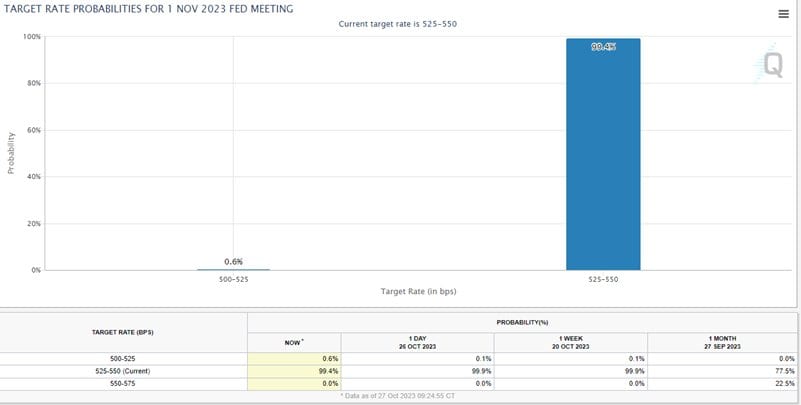
The good news, supposedly, is that although inflation is still high, it is holding steady, so the Fed is content with holding rates steady as well.
In the same PCE data release, personal spending increased by 0.7% month over month, stronger than estimates, so between GDP and this, it is clear that consumers are not tightening their habits.
Despite these apparent positive news, as we said a few weeks ago there are other consumer metrics that are still concerning, here are just a few:
· Sixty-day car payment delinquencies for people with bad credit hit an all-time record of 6.1 percent in September, up from 5.8 percent in August
· Ninety-day delinquency on credit cards has increased to 5.1 percent, up from 3.4 percent in the second quarter of last year
· Credit card and consumer loan debt balances topped $1 trillion in August, up 18% year over year
· Across all debt, including mortgages, credit cards, auto, student loans, etc, 90 day delinquency rates were 1.16% during Q2, up from 0.84% during Q2’22
In addition to debt, personal savings rates have dropped below pre-pandemic levels to 3.4%, the lowest level since 2008 while 64% of Americans say they are living paycheck to check. So, effectively, there seems to be no buffer or leeway in the economy for consumers. All the Fed headlines right now suggest stability, but there’s no question that consumers are being stressed while they paradoxically continue to spend.
Included with membership — $49/mo.
Keep reading
FinLit Newsletter 10-25-2023
GDP is coming out this week, and it should be a hot one. Here is what to expect from this week's numbers and reaction.
TLM Research
FinLit Newsletter 10-20-2023
Higher for longer interest rates and potentially a new neutral rate. What does that mean for you and the market? Come find out.
TLM Research

FinLit Newsletter 11-1-2023
Another big FOMC meeting is today! What can you expect? What are the projections? Let's dive in.
TLM Research